VPS Benchmarks: AMD EPYC vs Intel Xeon Servers
Choosing the right processor architecture is one of the most important decisions when deploying cloud infrastructure, VPS hosting platforms, or enterprise server environments. In modern datacenters, two processor families dominate the x86 server ecosystem: AMD EPYC and Intel Xeon.
Both architectures power millions of cloud servers across platforms such as AWS, Azure, and Google Cloud. They are used to host websites, run databases, execute virtualization workloads, and support large-scale cloud computing systems.
However, their design philosophies differ significantly. AMD EPYC focuses heavily on high core density, memory bandwidth, and I/O scalability, while Intel Xeon traditionally prioritizes strong single-thread performance and deep enterprise ecosystem compatibility.
This article provides a deep technical analysis of AMD EPYC vs Intel Xeon benchmarks, exploring how each platform performs in real-world hosting environments such as VPS virtualization, database workloads, cloud computing, and high-performance computing.
The Evolution of Server CPUs
For more than a decade, Intel Xeon processors dominated the server CPU market. Until around 2017, Intel held nearly total control of enterprise datacenters. However, the launch of AMD’s EPYC architecture introduced a new level of competition.
AMD designed EPYC processors using a chiplet architecture that allows more CPU cores, larger memory bandwidth, and increased PCIe connectivity compared to traditional monolithic CPU designs.
This architectural shift dramatically changed the economics of cloud infrastructure. Many datacenters discovered they could run more virtual machines per server node using EPYC systems.
Within just a few years, AMD increased its share of the server CPU market significantly and now powers a growing portion of global cloud infrastructure.
Server CPU Architecture Differences
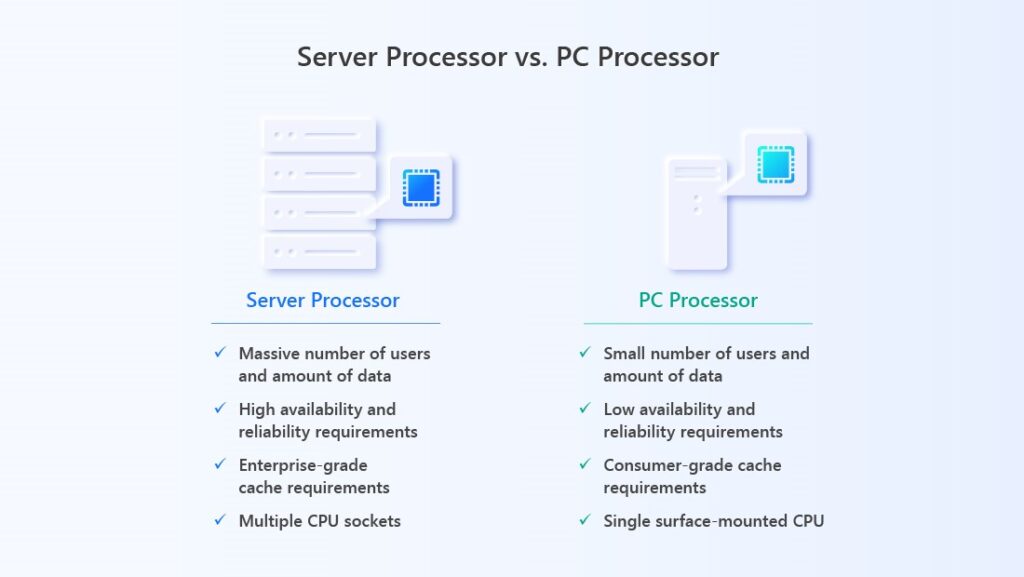
AMD EPYC Architecture
AMD EPYC processors are built around a modular chiplet architecture connected through AMD’s Infinity Fabric interconnect. This design allows AMD to scale core counts efficiently while maintaining high memory bandwidth.
Modern EPYC processors can reach extremely high core counts, with some models offering up to 192 cores in a single CPU package.
Key EPYC advantages include:
- Extremely high core counts
- Large L3 cache sizes
- High PCIe lane counts
- Excellent power efficiency
- Strong virtualization density
Intel Xeon Architecture
Intel Xeon processors follow a more traditional monolithic architecture but incorporate specialized hardware accelerators and advanced instruction sets.
Xeon platforms often integrate features such as AI accelerators, advanced security technologies, and compatibility with enterprise software ecosystems.
Intel’s upcoming Xeon architectures are also increasing core counts significantly, with some future processors expected to exceed 200 cores.
Benchmark Comparison Overview
Benchmarks comparing EPYC and Xeon processors typically measure performance across several categories:
- Single-thread performance
- Multi-thread performance
- Memory bandwidth
- Virtualization density
- Power efficiency
In many multi-threaded benchmarks, AMD EPYC systems deliver significantly higher compute throughput due to their larger number of cores.
Multi-Thread Performance Benchmarks
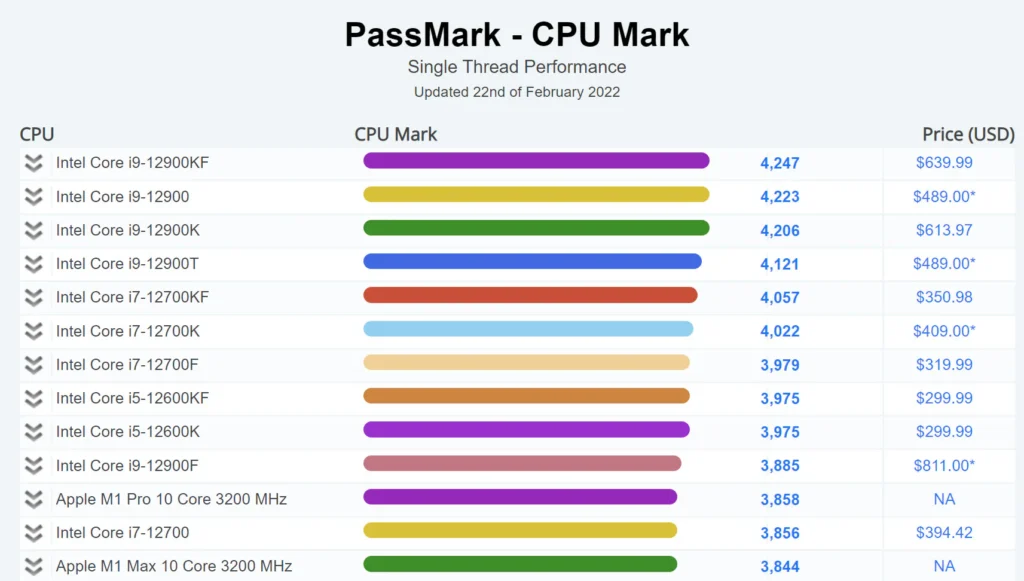
Multi-thread performance is particularly important for workloads such as cloud virtualization, container orchestration, and large-scale data processing.
Benchmark tests such as Cinebench and SPEC CPU show that dual EPYC configurations often outperform equivalent Xeon setups by substantial margins in multi-core workloads.
In some cases, EPYC servers can provide roughly 30–40% more total compute throughput compared with comparable Xeon servers in heavily parallel workloads.
This advantage becomes especially noticeable in VPS hosting environments where a single server may host dozens or hundreds of virtual machines simultaneously.
Single-Thread Performance
Single-thread performance remains an area where Intel Xeon processors traditionally perform well. Some enterprise applications still rely heavily on single-core performance rather than massive parallelism.
Databases, financial systems, and legacy enterprise applications often benefit from strong single-core performance, which historically favored Xeon architectures.
However, newer EPYC processors have significantly improved their single-thread performance and now compete closely with Xeon in many benchmarks.
Memory Bandwidth and Channels
Memory bandwidth is a critical factor in server performance, particularly for large databases and high-performance computing workloads.
EPYC processors typically offer more memory channels than competing Xeon processors, enabling higher aggregate memory throughput.
Higher memory bandwidth allows servers to process large datasets more efficiently and reduces bottlenecks in memory-intensive workloads.
Virtualization Density
For VPS hosting providers and cloud platforms, virtualization density is one of the most important performance metrics.
Virtualization density refers to the number of virtual machines that can run efficiently on a single physical server.
Because EPYC processors provide higher core counts and large cache resources, they can often host more VMs per server node compared with Xeon systems.
This allows cloud providers to reduce infrastructure costs while maintaining high performance for tenants.
Power Efficiency
Power consumption is a major cost factor in datacenter operations. Electricity and cooling expenses often represent a large portion of operational costs.
EPYC processors are widely recognized for delivering excellent performance-per-watt ratios, making them attractive for hyperscale datacenters.
Higher efficiency allows datacenters to run more compute workloads using less energy, which reduces operational costs and environmental impact.
Real-World Cloud Infrastructure Usage
Both AMD EPYC and Intel Xeon processors power major cloud infrastructure platforms including:
- Amazon Web Services (AWS)
- Microsoft Azure
- Google Cloud Platform
Large-scale cloud benchmarks show that infrastructure providers frequently choose between AMD and Intel architectures depending on workload requirements and cost optimization strategies.
Cost Efficiency and Total Cost of Ownership
When evaluating server processors, datacenter operators typically consider total cost of ownership (TCO), which includes:
- CPU price
- Power consumption
- Cooling costs
- Rack space
- Infrastructure efficiency
Because EPYC processors can often run more virtual machines per node, some hosting providers find them more cost-efficient for large-scale cloud environments.
Security Features
Both platforms include advanced security features designed to protect cloud workloads.
AMD EPYC processors include technologies such as Secure Encrypted Virtualization (SEV), which isolates virtual machines from each other at the hardware level.
Intel Xeon processors provide security technologies including Software Guard Extensions (SGX) and advanced memory protection features.
When to Choose AMD EPYC
EPYC processors are typically ideal for:
- Cloud hosting platforms
- VPS virtualization environments
- Containerized microservices
- High-performance computing
- Large-scale analytics workloads
When to Choose Intel Xeon
Xeon processors remain strong options for:
- Enterprise software environments
- Legacy enterprise applications
- Single-thread intensive workloads
- Organizations relying on Intel-certified ecosystems
Future of Server CPU Competition
The competition between AMD and Intel continues to drive rapid innovation in server CPU architecture.
Future generations of EPYC and Xeon processors are expected to push core counts, memory bandwidth, and energy efficiency even further.
As cloud computing demand continues to grow, the race between these two processor families will shape the next generation of datacenter infrastructure.
Conclusion
Both AMD EPYC and Intel Xeon processors offer powerful platforms for modern server environments. The best choice depends on workload characteristics, performance priorities, and cost considerations.
For virtualization-heavy workloads such as VPS hosting and cloud platforms, EPYC’s high core counts and efficiency often provide an advantage. For enterprise environments with legacy software dependencies, Xeon processors remain a strong and stable option.
Understanding these architectural differences helps infrastructure engineers design efficient cloud environments capable of supporting modern applications at scale.